
Dry needling is a great tool to use for addressing pain and injury and knowing how it works can help you determine how often you may need treatment and how long the effects will last.
It is important to understand that dry needling is effective for pain management and muscle tension release, but it needs to be paired with individualized physical therapy to ensure that you get to the root of the problem.
The dry needling alone will not fix whatever is driving the tension, pain, and/or weakness. It is a band-aid, or a crutch, to allow you to address those things with less or no pain. Before we use different tools to improve range of motion and strength, we need to relieve pain. This makes sense!
But, dry needling should be used as a tool to do that and not as the only treatment.
Don’t get me wrong- I LOVE using dry needling in the clinic! It is such instant gratification for muscle tension. Just have realistic expectations for a long-term solution.
What Is Dry Needling and How Does It Work
Dry needling uses thin needles that are called solid monofilament needles (the same as acupuncture needles) to reduce muscle tension/muscle tightness, increase blood flow, reduce pain, and stimulate the lymphatic system to pump waste away from the area.
Dry needling treatment follows the anatomy of the body to release trigger points (muscle knots.
By inserting the needle into a trigger point, the needle mechanically releases the bound muscle tissue– just like the goal of deep tissue massage, but it is much faster!
When a dry needle is inserted to the body, there is literally a micro lesion, or tiny wound that is created to stimulate an inflammatory reaction. This brings new blood flow to the area and jumpstarts the lymphatic system to clean things up.
We can also stimulate the nerve pathways in the body with dry needling to help with pain. The needle stimulates the nerve, distracting the body from pain and releasing endorphins to reduce it.
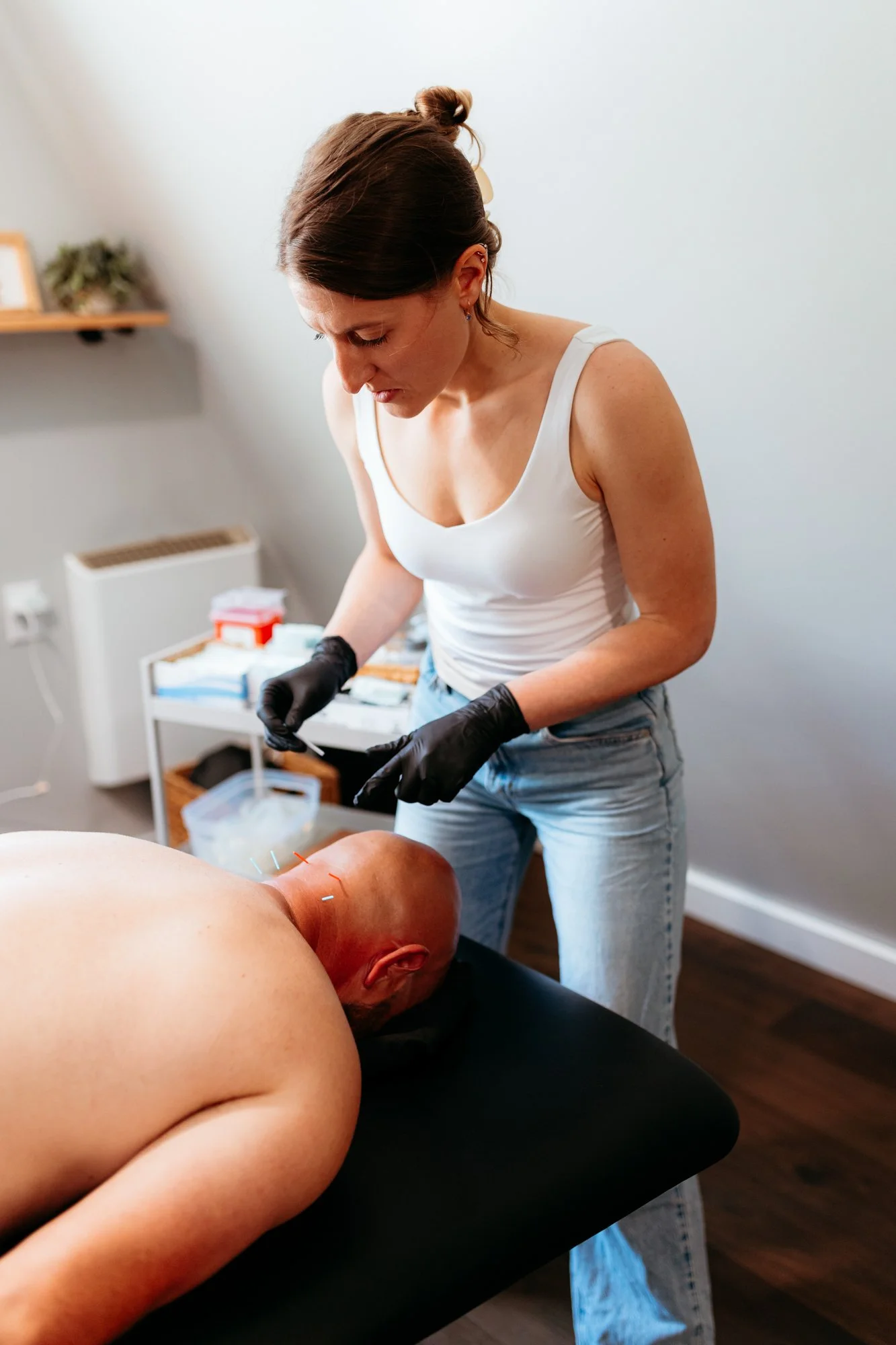
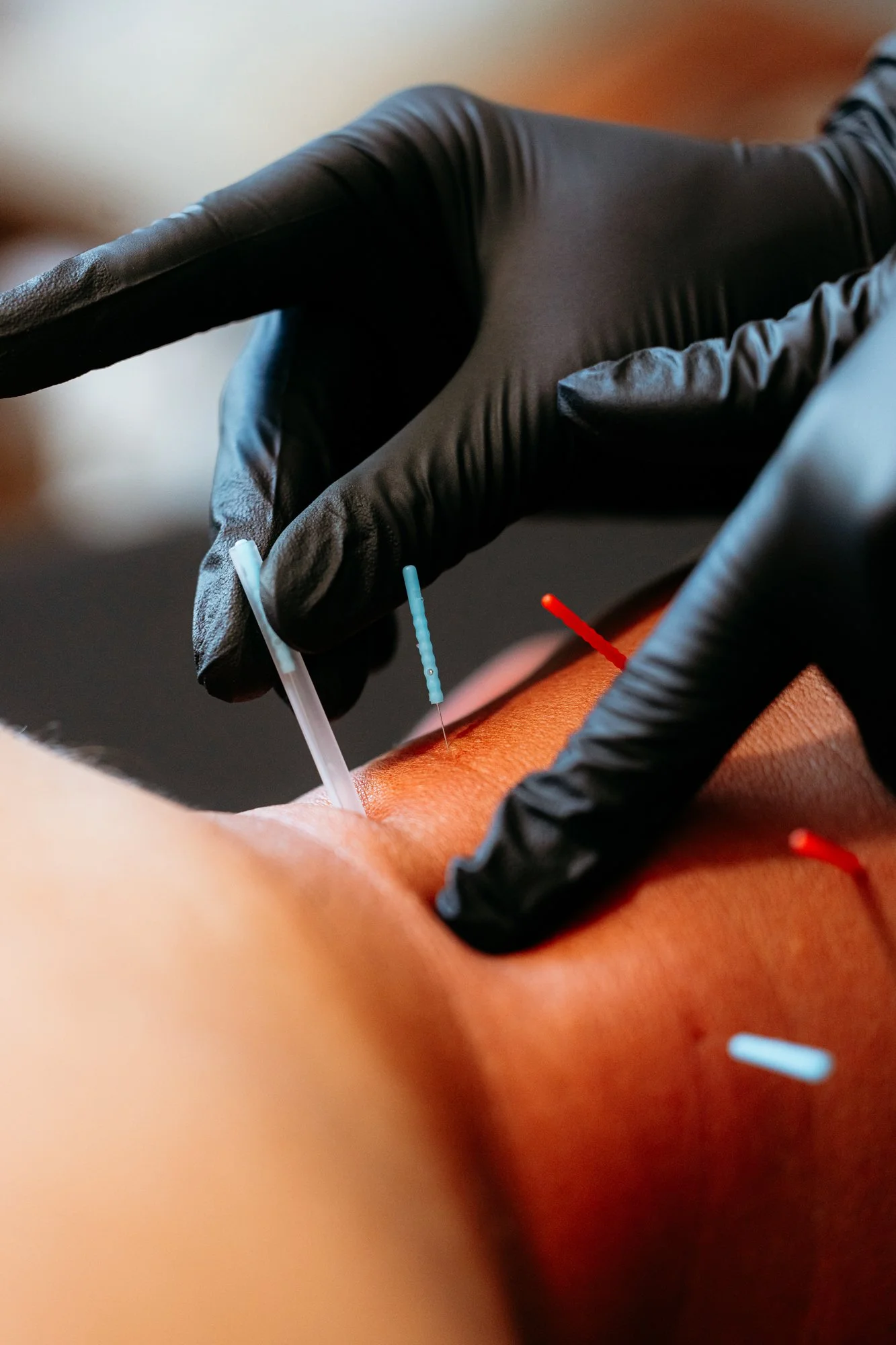
Check out the photos below of me dry needling a patient: You can see how thin the needles are!
How Long Does a Dry Needling Session Take
A dry needling session length really depends on the practitioner's approach and the goal of treatment.
I see all of my clients for hour-long appointments, but oftentimes we are implementing a variety of treatments.
The needling itself does not take long if you are only going into one area or muscle, but I am usually going into more than one area and following the nerve pathways around the symptomatic area.
The approach to needling that I use does not require the needle to stay in for any length of time to make it effective.
Once the needle has created the micro lesion and/or released the muscle, it has done its job.
What to Expect After Your First Session
It is normal to feel achy, sore, and/or bruised after dry needling for up to 24 to 48 hours after treatment.
After the initial soreness, you have the peak effect of the needling with reduced tension and pain and mobility typically improves with that. But everyone responds differently, so you may just feel loose and pain-free right away.
Other less common but normal sensations can be tingling or nervy sensations, and dizziness or lightheadedness. Those symptoms should subside within a couple of hours.
How Many Sessions Do Most People Need
Everybody responds differently to dry needling, so there is no hard and fast answer here.
But the effect of dry needling is cumulative and stacking sessions weekly when symptoms are more irritable can help speed up recovery.
It also depends on how chronic the issue you are treating is. If it is a recent injury, we have a better chance of recovering faster.
If you're experiencing chronic pain, using dry needing can help reduce pain, of course, but you'll likely need more than only one session.
Factors That Affect How Long Results Last
Dry needling is a great tool to help with symptom management, but I like to think of it more like a Band-Aid to get things feeling better so that you can tolerate more exercise prescription that gets at the root of the problem.
Once things are calmed down and you are independent with self-care techniques, we can use dry needling when tweaks come back up, or you need a tune-up.
If you aren’t addressing the root of your symptoms, then dry needling just becomes a short-term solution that you have to keep going back for.
When to Come Back for a Follow-Up
Collaborate with your provider on what kinds of movement and stretching you can be doing between sessions to extend the results of dry needling.
Always work with a provider who educates you on why you are utilizing the treatment tools and techniques that were chosen. It's important that you're involved in your treatment plan and understand everything your provider implements (this goes for your physical therapist, but also any provider you work with!)
Knowledge is power and being an active participant in your recovery is key!
Where to Find Dry Needling in Meredith and the Lakes Region of NH
If you are local to the Lakes Region of New Hampshire and curious if dry needling could be helpful for your injury, book a free discovery call. I offer dry needling as a part of physical therapy treatment for neck pain, back pain, knee pain, and lots of other orthopedic conditions.
My clinic is conveniently located in downtown Meredith, and I'd love to work with you!