Pregnancy Physical Therapy
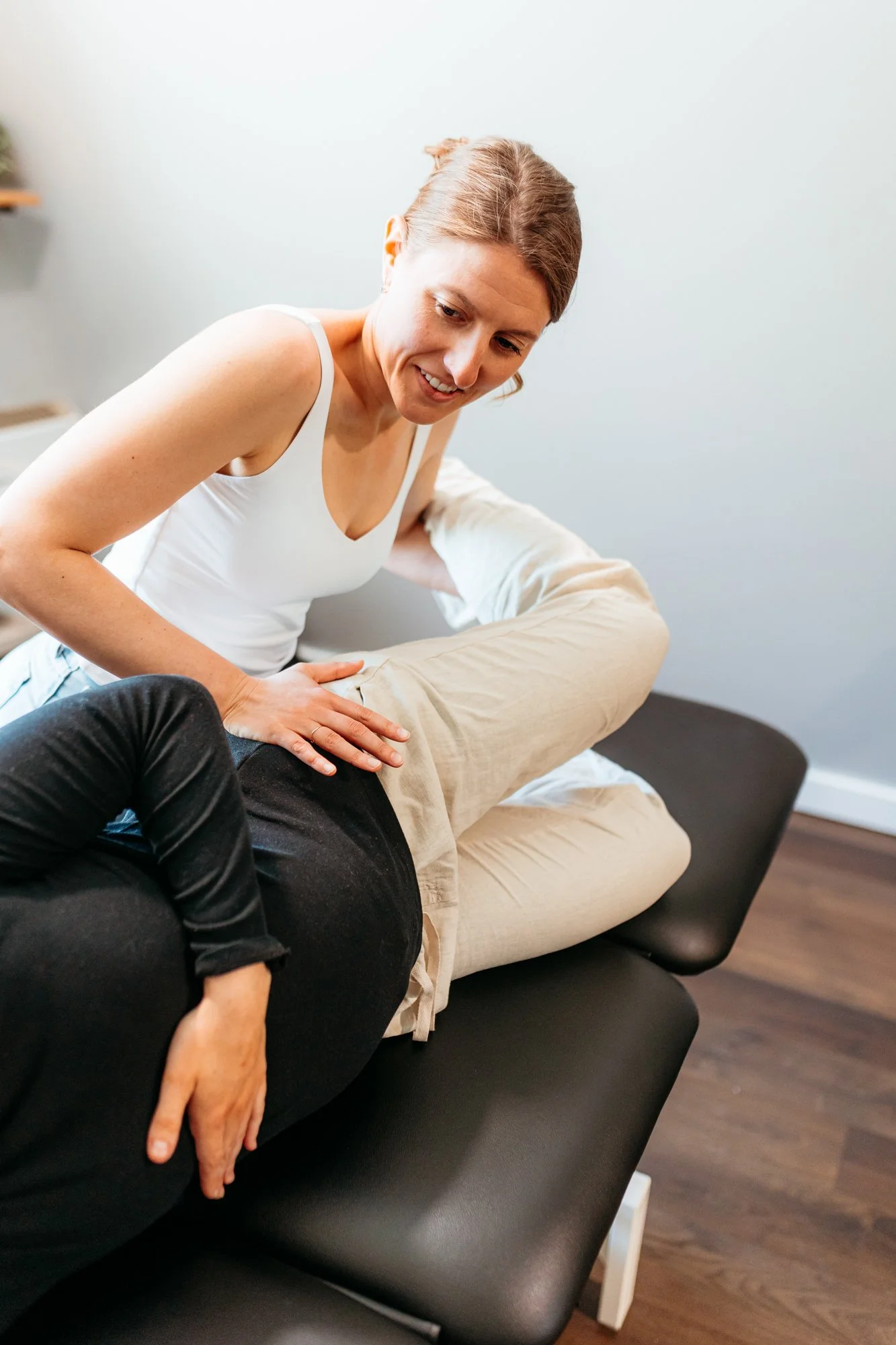
Being told, “that’s just part of pregnancy,” is not advice you should be following.
Pelvic floor PT during pregnancy can help with any pain you are experiencing from your changing body, or it can help you stay strong to help decrease the risk of developing issues during pregnancy.
Pregnancy PT can also help you with birth prep to reduce your risk of tearing during a vaginal delivery and give you tools to use during labor and contractions.
Here is a list of some of the conditions that pelvic floor PT during pregnancy can help with:
Prolapse
Pubic symphysis separation
Round ligament pain
Diastasis recti
Sciatica
Plantar fasciitis
Urinary incontinence
Constipation
During pregnancy, you may start to experience back pain, foot pain, hip pain, pain at your pubic bone (fire crotch), heaviness in your vagina, tension in your ribcage, leaking with coughing or sneezing, and pelvic pain. None of these are symptoms you just need to “deal with”.
Your symptoms aren’t a badge of honor you wear because you are pregnant. There is help available!
I am here to help guide you through pregnancy and beyond, so once you have delivered, we will start postpartum rehab to get you back to all of the activities you love doing!
What to expect when you work with me
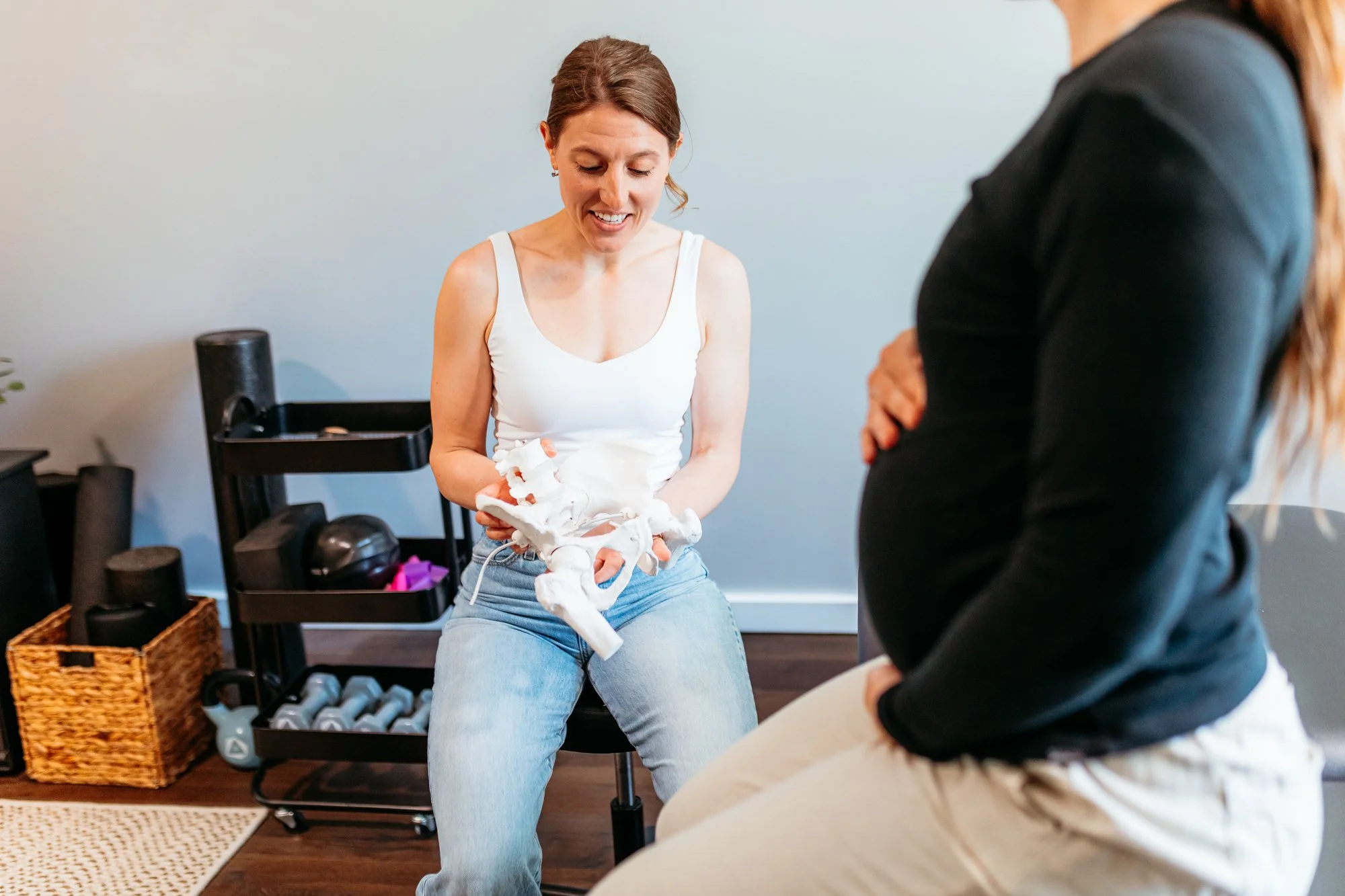
When working with me, you can expect a “whole human” approach. The body is completely connected and we have to look at the full picture to get to the root cause of your issue. Most people like to start by scheduling a free discovery call to answer any questions and learn more about my approach to make sure we are a good fit.
-
During the initial evaluation, we will spend quite a bit of time chatting about your health history and current symptoms to better understand what will be most important to assess during the physical exam. During our conversation we will identify any bowel or bladder habit changes that need to be addressed and by learning more about your pelvic floor you will feel empowered to become an expert of your own vulva! We also discuss your goals for treatment to make sure we are working on what is most important to you.
At the initial session, we will also do a movement analysis, and any other assessment that our conversation points us to, depending on your symptoms. Based on the findings, we will create a plan for how often you should come back for follow up sessions and the goals for each session based on what trimester you are in.
-
Follow-ups are where treatment really gets started, and we address some of the things we found during your initial evaluation. During the first trimester we are really focusing on doing any movement that allows you to stay active and address any symptoms you are experiencing during this period of fatigue, nausea, and decreased energy levels. As you transition to your second trimester we focus on building strength to set your body up as your baby grows and to lay a good foundation to work from postpartum. The third trimester is where we start focusing on birth prep with mobility and perineal massage to reduce your risk of tearing during a vaginal delivery.
This is not your average PT clinic.
You get one-on-one individualized care focused around your goals. Because our sessions are an hour long we have plenty of time to work on treatment and give you tools to work on at home. In this model, I don’t see clients more than once a week because of the targeted treatment and prescribed exercises for home. I am not here to watch you do the same exercises over and over again. During sessions I review or answer any questions about the exercises and we spend time on new things. Honestly, the goal is for you to not need me anymore- and I take no offense to that! I will be here if anything pops up in the future or you just feel like you need a tune up!
The Process
-

Schedule
If you’re ready to get started, you can book your first appointment online.
If you still have questions, feel free to book a discovery call or fill out the form on my contact page.
-

Paperwork
You will receive online paperwork via email to fill out at least 24 hours prior to your evaluation. This will help me prep for your session.
The intake paperwork is extensive so that I have a complete picture and history before we meet.
-

Evaluation
Your evaluation begins with a conversation about your health history and concerns.
From there, I may assess movement patterns, flexibility, strength, and range of motion. We'll discuss what an internal pelvic floor exam entails, and you'll decide if you'd like to include that during your first visit or wait until you're ready.
-

Plan
After the physical exam, we will go over my findings and create an individualized plan of care for you.
This will include how often I think we should schedule follow up sessions, as well as treatment technique recommendations.
Frequently Asked Questions
-
Yes. Pelvic floor PT is safe throughout all three trimesters. It is designed to meet you where you are, whether that means gentle movement in the first trimester or birth prep in the third.
-
Back pain, hip pain, pubic bone pain, heaviness in the vagina, leaking with coughing or sneezing, rib tension, foot pain, and general pelvic pain. If something feels off, it is worth bringing up.
-
Being told "that's just part of pregnancy" is not advice you should be following. Many symptoms are common, but common does not mean you have to live with them. There is help available.
-
The initial evaluation is mostly conversation. We go deep on your health history, current symptoms, and goals for treatment. We also do a movement analysis and any other assessment that makes sense based on what you share. You leave with a clear picture of what we are working on and why.
-
No. If you are feeling good and want to stay that way, PT can help you build the strength and body awareness to reduce your risk of developing issues as your pregnancy progresses.
-
First trimester focuses on keeping you active and managing fatigue, nausea, and low energy. Second trimester shifts to building strength as your baby grows. Third trimester is all about birth prep, with mobility and perineal massage to reduce your risk of tearing during a vaginal delivery.
-
Yes. Common conditions we work with include pubic symphysis separation, round ligament pain, diastasis recti, sciatica, prolapse, plantar fasciitis, urinary incontinence, and constipation.
-
That depends on what we find at your initial evaluation. Sessions are one-on-one and an hour long, and most clients are not seen more than once a week. Between sessions you will have home exercises to work on so the progress keeps going.
-
Every session is one-on-one, focused on your goals, and long enough to actually do meaningful work. You are not here to watch yourself do the same exercises on repeat. The goal is targeted treatment, good home programming, and eventually not needing to come in at all.
-
Yes. Once you have delivered, we transition into postpartum rehab to get you back to all of the activities you love. Pregnancy PT and postpartum PT work best when they are connected, and that continuity makes a real difference.
Learn More About Pelvic PT