Pelvic Health Physical Therapy for Women
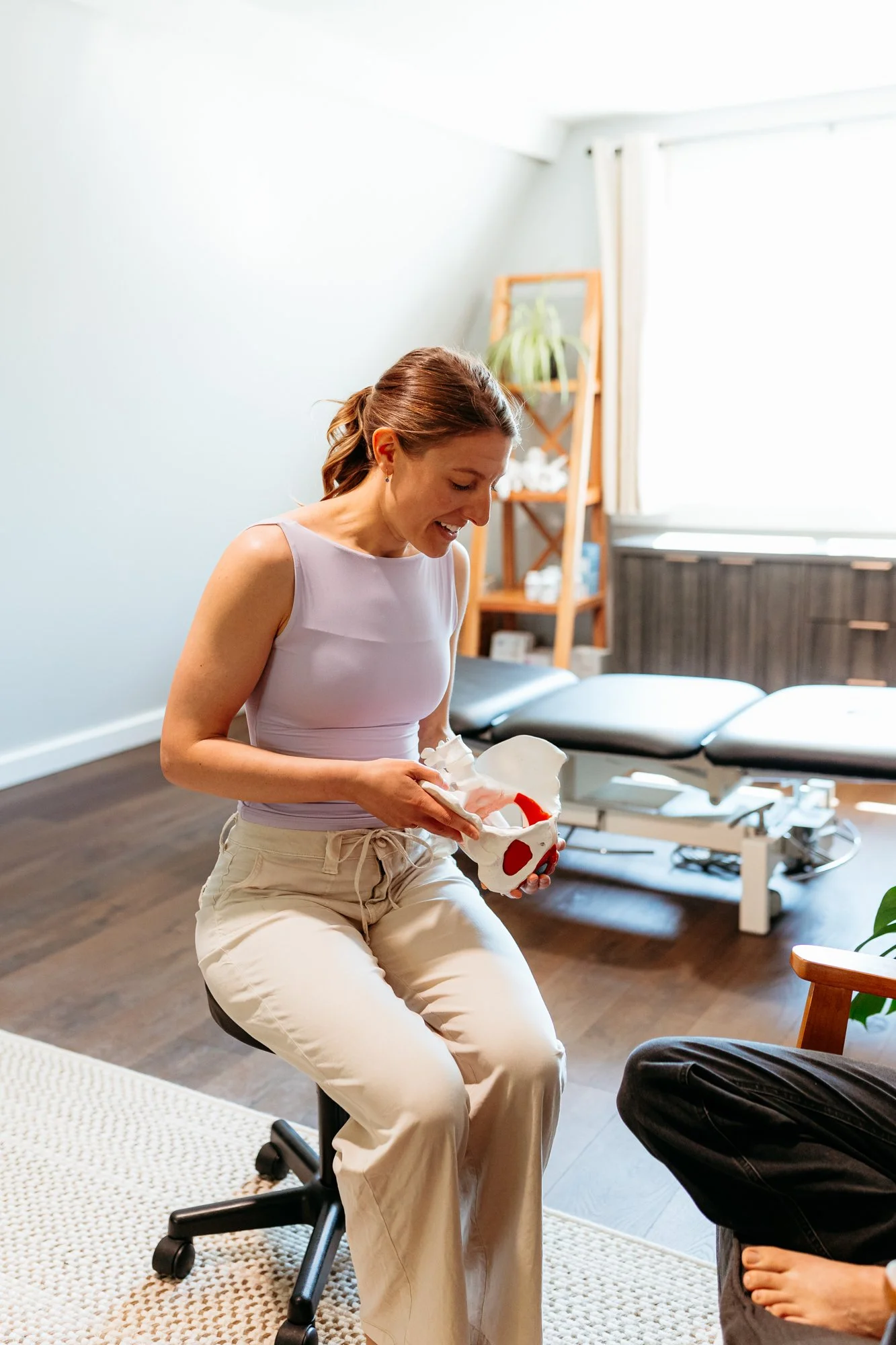
Just because some of these pelvic floor issues are common doesn’t mean they have to be your new normal!
Pelvic floor physical therapy can help you take control of your bathroom habits, intimacy, and life back!
I am here to help you every step of the way, giving you the tools you need to successfully return to running without leaking, have pain-free sex postpartum, or improve your diastasis recti.
I work with women who:
Leak or have urinary incontinence
Have pelvic pain with sex
Are pregnant or postpartum
Have diastasis recti
Are preparing for birth
Want to return to exercise postpartum
Experiencing pelvic heaviness or pelvic pain
Have pelvic organ prolapse
Have GI distress and/or consitpation
…and more
I offer a whole-person approach to pelvic health.
Your pelvic floor doesn't exist in isolation. It's deeply connected to your nervous system, your emotional well-being, and your life experiences. Stress, trauma, and stored emotions can manifest as physical tension, pain, or dysfunction in the pelvic region. That's why effective pelvic floor therapy addresses both mind and body together.
I provide a safe, judgment-free space where you can share intimate concerns and work through sensitive health issues at your own pace. Whether you're experiencing pelvic pain, bladder or bowel concerns, GI distress, constipation, painful intercourse, or symptoms related to past trauma, you deserve compassionate, individualized care.
Each session is one-on-one with me in my private treatment space. During sessions, you’ll always work directly with me and between sessions, you will have access to me for questions, should something come up before we meet for our next session.

What to expect when you work with me
I understand that pelvic health issues can be deeply personal and that past experiences, including sexual trauma, can affect how your body holds tension and responds to treatment. My approach is grounded in trauma-informed principles, which means:
You are always in control of your treatment
Nothing is ever pushed on you
We move at the pace you're comfortable with
Your voice and comfort level guide every session
Consent is ongoing and can be withdrawn at any time
Providing trauma-informed care is a core value inside my practice. This is your healing journey, and I'm here to listen, support, and provide expert guidance as your partner in care, never to rush or pressure you.
The Process
-

Schedule
If you’re ready to get started, you can book your first appointment online.
If you still have questions, feel free to book a discovery call or fill out the form on my contact page.
-

Paperwork
You will receive online paperwork via email to fill out at least 24 hours prior to your evaluation. This will help me prep for your session.
The intake paperwork is extensive so that I have a complete picture and history before we meet.
-

Evaluation
Your evaluation begins with a conversation about your health history and concerns.
From there, I may assess movement patterns, flexibility, strength, and range of motion. We'll discuss what an internal pelvic floor exam entails, and you'll decide if you'd like to include that during your first visit or wait until you're ready.
-

Plan
After the physical exam, we will go over my findings and create an individualized plan of care for you.
This will include how often I think we should schedule follow up sessions, as well as treatment technique recommendations.
Frequently Asked Questions
-
Pelvic floor physical therapy involves treatment specifically for issues in the pelvic region. These issues may include a wide variety of symptoms including pain, bowel or bladder dysfunction, and/or perinatal changes. Assessment and treatment can include an internal vaginal or rectal exam to determine the source of your symptoms.
-
You do not need a referral for pelvic floor PT in the state of New Hampshire because we are a direct access state. If at any time during your course of treatment or initial evaluation it is determined that your symptoms are not pelvic floor related, you will be referred to the appropriate provider.
-
We will spend a good amount of the session chatting so that I can better understand your symptoms, health history, and goals. Based on our conversation, we will decide together what is most important for us to assess this session based on what I think is contributing to your symptoms the most. That could be a movement assessment, or an internal exam. Our findings will help me develop a plan of care for you.
-
The short answer is no! Pelvic floor physical therapy may reproduce your symptoms but we never push through them. If something becomes painful during the assessment or treatment we stop or back off of that area. Everything during treatment should be tolerable and I will teach you techniques to help decrease pain so that you can implement them on your own between sessions.
-
All sessions scheduled with me are one hour long. The length of your plan of care depends on what we find during the evaluation, how long you have been experiencing symptoms, and how your body responds to treatment. But we should see some improvement or change in symptoms within a couple of sessions. I don’t believe in wasting your time so if you are not seeing progress, we will change our approach and treatment techniques, or I will refer you out to another provider that may be indicated in your care.
-
This is an umbrella term for a symptom of many different pelvic floor diagnoses. It basically means that there could be some tension in your pelvic floor, that your pelvic floor is weak, or that you have poor coordination of your pelvic floor muscles. You could have more than just one of these things going on as well.
-
Pelvic floor physical therapy treats many different conditions including pelvic pain, pain with intercourse, pelvic organ prolapse, diastasis rectus abdominus (DRA), hip or low back pain, incontinence of the bladder or bowels, constipation, postpartum recovery, pregnancy, and birth prep.
-
Pelvic floor PT is not only for women. Men have pelvic floors too! But at this time I only specialize in treating women.
-
Typically people think that they can’t start pelvic floor PT until they have their 6 week clearance from their OBGYN, but that isn’t the case! You can start pelvic floor PT as soon as you are settled in after your birth and ready. We will wait until after 6 weeks postpartum to do any internal pelvic floor assessment or treatment as the tissue heals.
-
Depending on your insurance coverage, insurance can cover pelvic floor PT. I do not accept insurance at my clinic, but I can provide you with documentation to submit for reimbursement if your insurance covers out-of-network benefits.
-
Something comfortable to move around in like gym clothes.
-
Pelvic floor PT is very similar to “regular” physical therapy because the pelvic floor is a group of muscles that can get injured just like any other part of the body. It may look different because of how we access those muscles via an internal exam either vaginally or rectally.
-
During your evaluation, you and your physical therapist will discuss if an internal assessment is indicated based on your concerns and symptoms. Your consent is always needed before doing anything. A pelvic floor internal assessment is not necessary, but it definitely helps with more targeted treatment. If you are still unsure about this please bring it up to your physical therapist.
-
It depends on what we find on evaluation, but typically we will meet once a week and you should see improvement within a couple sessions.
-
An internal assessment is different from a gynecological exam, as speculums are not used. Your physical therapist will insert a gloved finger vaginally or rectally to assess your pelvic floor muscles just like they would want to assess your shoulder muscles if you were having an issue there.
Learn More About Pelvic PT