
What Causes A Tight Pelvic Floor?
A tight pelvic floor occurs when the muscles at the base of the pelvis become stuck in a contracted position, leading to tension, soreness, and coordination issues. These muscles play a central role in core stability, bladder and bowel control, sexual function, and pressure management through their connection with the diaphragm and deep core system.
Common contributors include underlying weakness, chronic stress, and poor breathing mechanics that disrupt healthy pressure distribution throughout the core. When symptoms begin affecting daily life, working with a pelvic floor physical therapist can help identify the root cause and guide appropriate treatment.

I am so excited that the pelvic floor is becoming more widely recognized and talked about these days! But in case you are new to the topic, let me review what the pelvic floor is before diving into what causes a tight one.
The pelvic floor is a group of muscles at the bottom of the pelvis.
These muscles are responsible for giving you core stability, organ support, sexual function, and bowel and bladder control.
The pelvic floor works together with other muscles of the core, including the diaphragm, the multiple layers of abdominal, and the low back muscles, to function properly.
When the pelvic floor has optimal muscle coordination, we have continence. The pelvic floor lengthens to allow us to go to the bathroom and let contents out, and it contracts and shortens to keep things in.
This group of muscles gives us stability by pressurizing our core. This is because of the diaphragm’s connection to breathing. The diaphragm is a muscle that helps fill and empty our lungs with air. All of the core muscles work together by providing equal pressure throughout the core like an unopened soda can.
Diagram of pelvic floor muscle (view from below):
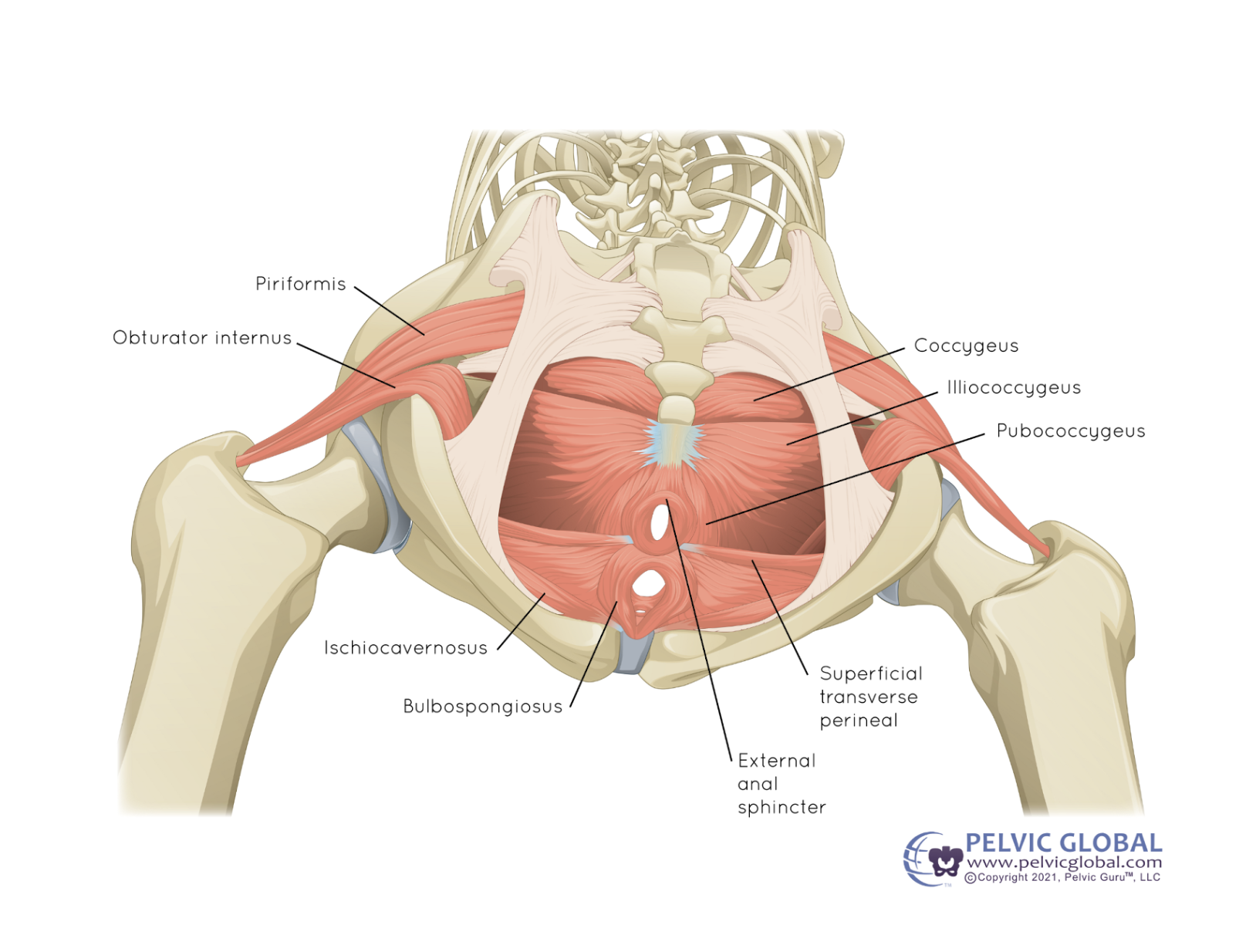
Image used with permission from Pelvic Global, LLC
There are many things that can lead to pelvic floor dysfunction, including a tight pelvic floor.
What a tight pelvic floor means:
You know how you can have tension and muscle knots in other muscles in your body? The same thing can happen at your pelvic floor muscles!
This is when your muscles get stuck in a contracted position.
This is what pelvic floor tension means and it can feel like pelvic pain or aching and/or soreness in the pelvic region including the perineum (bottom of the pelvis where your urethra, vaginal open, and anus are located), hips, tailbone, and low back.
Pelvic floor tension is often referred to as a "hypertonic pelvic floor".
Common causes of pelvic floor tension:
There can be multiple factors that contribute to pelvic floor tension and it is often more than just one thing.
The top 3 causes of pelvic floor tension that I see include weakness, stress, and poor pressure management.
Pelvic floor weakness and pelvic floor tension
Tension can be a symptom of weakness.
When there is not enough strength for muscles to perform the activity at hand, they can become tight from constantly giving you all they’ve got. Then they run out of fuel to be able to let go so they get stuck in the contracted position causing a trigger point or muscle knot. Sometimes, folks will experience muscle spasm as well.
Stress and pelvic floor tension
Stress can also cause tension.
When we are stressed, our body is in fight-or-flight mode.
That can cause us to be tense without even realizing it. When the sympathetic nervous system (that fight-or-flight mode) is triggered the body is only worried about protection and survival.
One way the body knows how to protect us is to muscle guard.
You have probably noticed this before in your shoulders and neck- one of the most common places to hold tension and stress. The same thing can happen at the pelvic floor!
The next time you are stressed, notice if you are holding tension in your glutes (butt clenching)!
Pressure management and pelvic floor tension
Poor pressure management can contribute to pelvic floor tension too.
Remember that connection of the core to breathing via the diaphragm?
Yeah, that is what keeps our system pressurized.
When we aren’t dispersing the load around the whole core system, we can have increased stress in one area. Think about the difference in pressure at the heel of your foot if you were wearing a stiletto vs a sneaker.
The sneaker keeps things equally dispersed. So when you aren’t using the whole system for breathing, you can add increased pressure to the pelvic floor.
You can read more about how breathing is connected to the core in my blog: How breathing can make you stronger.
Diagram of the core:
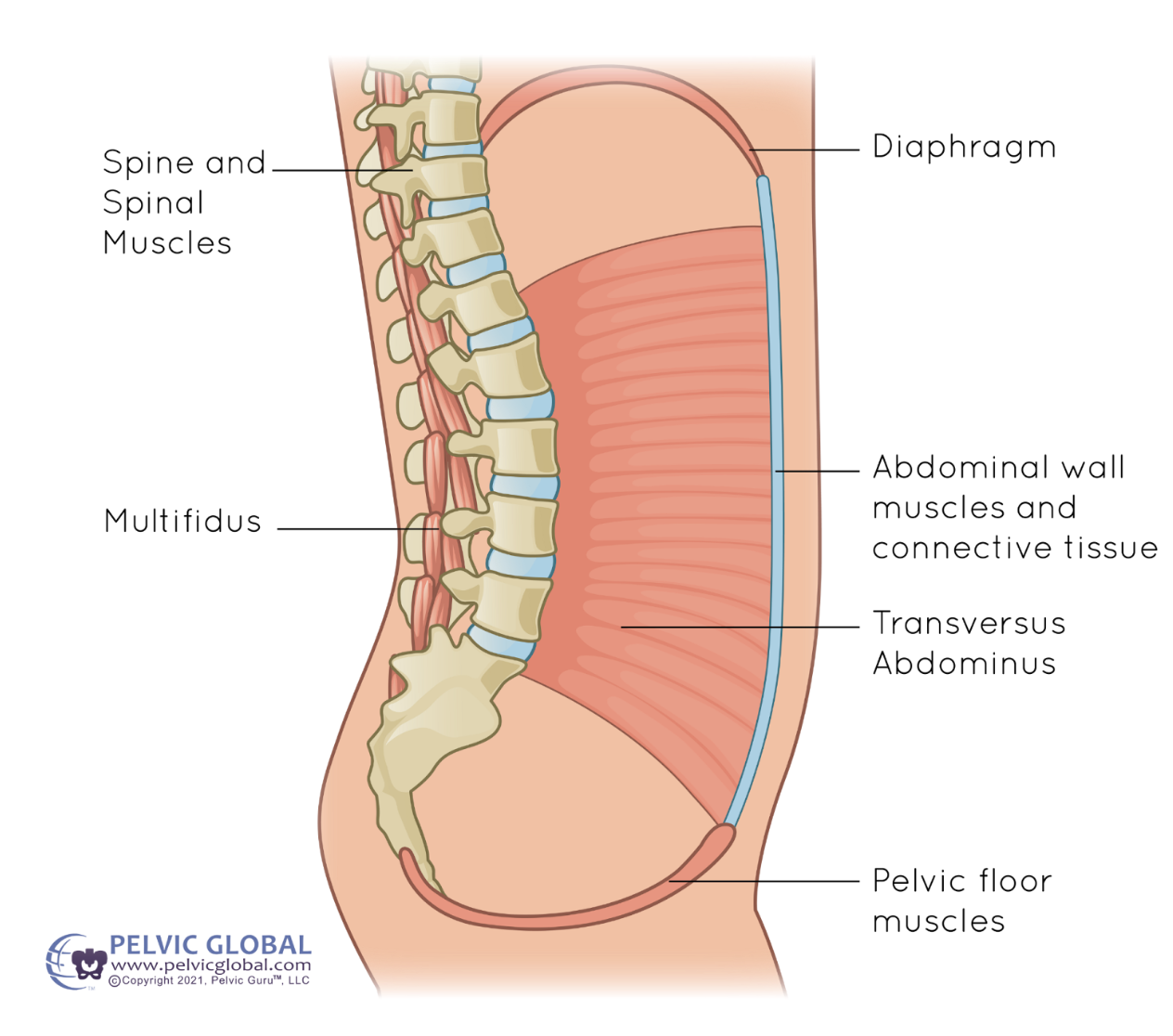
Image used with permission from Pelvic Global, LLC
How to help a tight pelvic floor:
Before we can start to strengthen the pelvic floor, we must lengthen! Think about this as relaxing your pelvic floor.
In order for the pelvic floor to be able to fully contract it must be able to use the full muscle length to generate force.
Here is a general layout for what we will typically focus on.
First, we will want to work on pelvic floor flexibility with stretching exercises.
To address stress and a fight-or-flight nervous system state, we can work on relaxation techniques including diaphragmatic breathing, vagus nerve stimulation, and brain retraining.
These techniques stimulate your parasympathetic nervous system, also known as your rest and digest system.
This relaxes the nervous system and reminds the brain that the body is safe and doesn’t need to be in a constant protection mode.
Breath retraining is how we can improve core pressure management.
By learning how to maintain optimal pressure inside the core, we build the foundation for progression of breathing with strength training. We want to teach the core how to lengthen and shorten together with the breath.
If you suspect that you have a tight pelvic floor and you are experiencing symptoms that affect your quality of life, I highly recommend reaching out to a pelvic floor physical therapist for a full evaluation to better understand the root cause of your symptoms!
Where to find pelvic floor physical therapy in Meredith and the Lakes Region of New Hampshire
If you are located in Meredith or the surrounding Lakes Region area, I'd love to help you address your pelvic floor tension and/or other pelvic concerns.
My office is conveniently located in downtown Meredith, and I offer individualized pelvic therapy for women who are looking for a trauma-informed, gentle, and caring approach. To get started, feel free to book online. If you have questions before you begin, feel free to contact me or book your free discovery call.
Next on your reading list:
Disclaimer: The information provided on this blog is intended for general wellness education purposes only and is not a substitute for professional medical advice, diagnosis, or treatment. Always seek the advice of your physical therapist, physician, or other qualified health provider with any questions you may have regarding a medical condition.