

Skiing with knee pain is no fun! When patellar tendonitis is affecting your ability to ski, it might be time to see a physical therapist. This blog will help you better understand patellar tendonitis.
What Patellar Tendonitis Is
Patellar tendonitis is an overuse injury of the knee.
The patellar tendon connects the patella (kneecap) to the tibia (shin bone).
In order to understand how the patella tendon can get overused, you need to know its connection to the quadriceps… The quads attach to the patella and one of their actions is to straighten the knee. The quads are also firing when you squat or bend your knees against a load as they lengthen.
So every time the quads are loaded, the patella gets pulled on, which pulls on the patella tendon and the insertion point on the tibia. All of that to say, whenever the knee moves, the patellar tendon moves.
If the load on the quads increases more quickly than the patellar tendon has the capacity for, inflammation can occur around the tendon, and the patellar tendon can begin to break down.
For example, you start skiing everyday right when the season starts after not activating the quads with activity or strengthening all summer/fall. Okay, that's an extreme example, but you get the point!
Why Skiing Is Hard on the Patellar Tendon
Skiing is especially hard on the knees, and therefore the patellar tendon.
Skiing requires quad control and strength to shock absorb terrain changes, and jump landing, as well as turning.
When skiing your quads are basically always working to stabilize you in an athletic stance. Because of this, the knees take a lot of stress during skiing that requires your quads to fire, pulling on your patellar tendon.
Can You Ski With Patellar Tendonitis?
The short answer is yes, but recovery is more gray than black and white.
With tendonitis it is important to modify the load to the tendon while continuing to strengthen it. I like to compare tendons to rubber bands– they like to be stretched, and they don’t do well with complete reset. When a rubber band gets thrown in the drawer and forgotten about it starts to break down and lose its elasticity.
So you may be able to continue skiing while still needing to pull back on frequency or duration, and addressing individualized strengthening.
Signs You Should Take a Break From the Slopes
It is important to listen to your body, and if your pain is not getting better or is getting worse you may need to take a break or modify your skiing.
If pain doesn't go away when you stop skiing that is a sign that you may have over done it. It is best to see a movement specialist like a physical therapist to help evaluate your symptoms.
How to Prepare Your Knees Before Ski Season
Staying active in the off season is key to keep you feeling strong through your whole ski season. I have listed some exercises that can help prepare your knees for ski season:
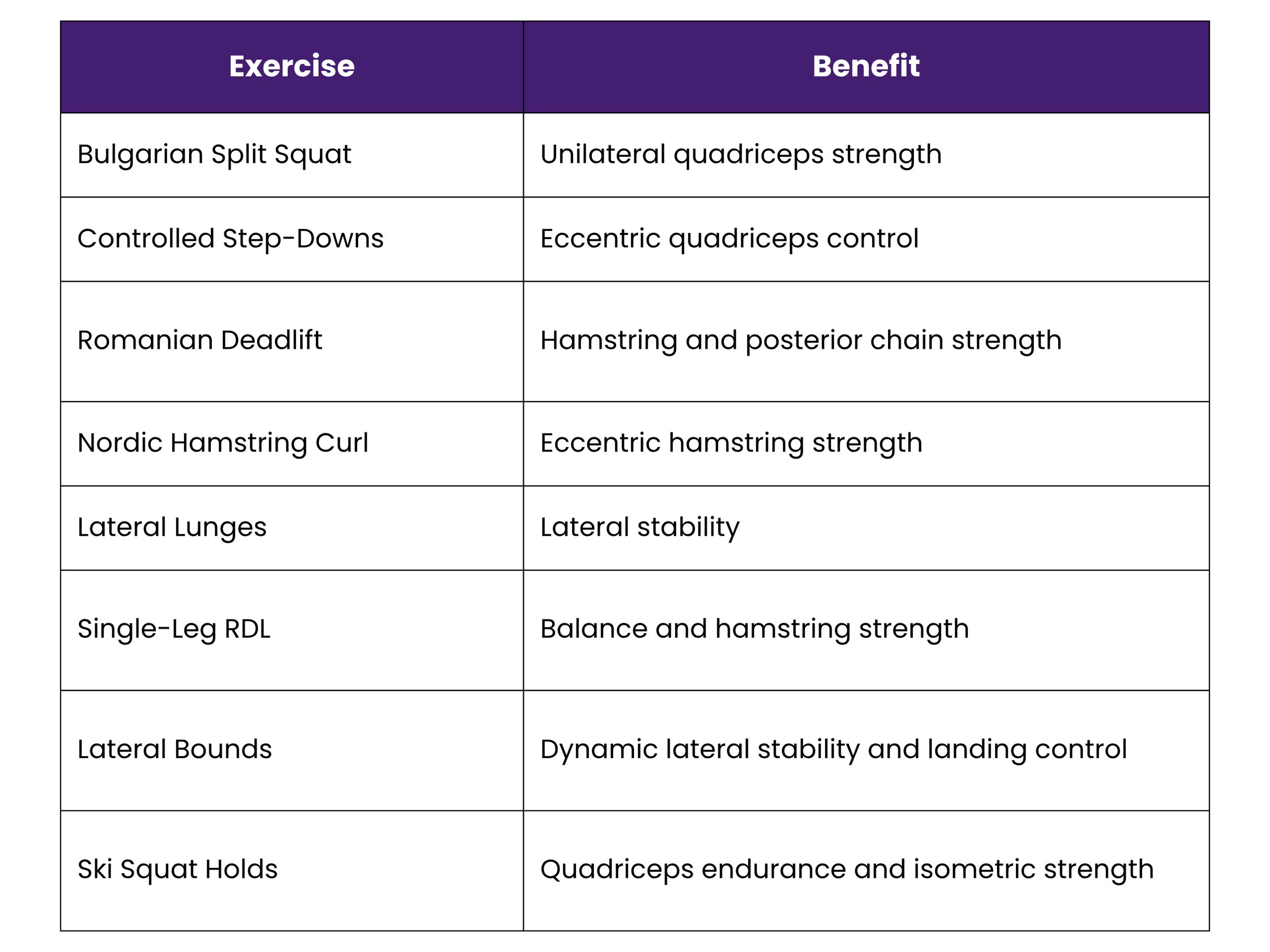
Tips for Skiing With Less Knee Pain
Of course strengthening the muscles around the knees is important to help with knee pain, but it is equally important to make sure your hips and core are strong to be able to disperse the load.
Whole body fitness can help off load the knees and keep you feeling strong on the slopes.
Recovery After a Day on the Mountain
Our muscles need time to rest and repair in order to gain strength and endurance. That doesn’t mean that you have to do nothing.. You can work on mobility and flexibility, or do something for leisure like a walk or hike.
Other aspects of recovery include getting proper hydration and nutrition during the week based on your skiing intensity and frequency. When we have the proper nutrients we heal our tissues and grow muscles faster.
How Physical Therapy Helps
Seeing a PT is a huge help to knee pain! A PT will perform an evaluation to understand what is causing your pain. Based on what is found during evaluation, your PT will create a plan with you to address weaknesses, mobility deficits, and muscle tension to get you back to skiing at your best level!
Some techniques that your PT may use for knee pain include:
Skiing load modification
Strengthening exercises
Muscle and tendon scraping
Soft tissue mobilization
Cupping
Nerve flossing
Red light therapy
Where to Find a PT Who Can Help You With Skiing Injuries, Aches, and Pains
If you are local to the Lakes Region and are interested in working together to address your knee pain, schedule a free discovery call or book an initial evaluation at my clinic in Meredith, NH.
I offer physical therapy specifically for athletes, which is what I consider skiiers to be! I have transparent pricing and easy online booking as well.
I’d love to work together to keep you skiing strong!